How to create your own ChatGPT easily! Build, train & launch your AI chatbot with this simple 2025 guide. Perfect for beginners & pros.
How to Create Your Own ChatGPT: The Ultimate 2025 Guide
Artificial intelligence is no longer the future — it’s the present. Everyone wants to create their own ChatGPT to boost productivity, automate conversations, and enhance business growth. Whether you’re a developer, entrepreneur, or student, this guide will show you how to create your own ChatGPT in simple, practical steps.
1. What Is ChatGPT and Why Build Your Own?
ChatGPT is an advanced conversational AI model developed by OpenAI that understands and generates human-like responses. It can answer questions, write essays, summarize content, and even code.
When you create your own ChatGPT, you gain control over tone, data privacy, and specific business goals. Imagine a custom AI assistant that knows your brand voice, supports your customers 24/7, and never takes a break. That’s the power of personalized AI.
(Outbound link example: Learn more about ChatGPT architecture on OpenAI’s official site.)
2. Choose the Right Way to Create Your Own ChatGPT
You don’t need to build a billion-parameter model from scratch. Depending on your resources, you can create your own ChatGPT in three ways:
A. Use a Pre-Built API (Fastest Method)
APIs from platforms like OpenAI, Cohere, or Anthropic let you build chatbots instantly. You simply send text to the model and receive AI-generated replies.
✅ Best for small businesses and beginners.
B. Fine-Tune an Open-Source Model
Use open-source models such as LLaMA 3, Mistral, or Falcon and train them on your custom data. Fine-tuning helps your chatbot adopt your tone and domain knowledge.
⚙️ Best for developers who want more control.
C. Train from Scratch
If you have vast data and GPUs, you can train your own model. This gives total ownership but is costly.
🚀 Best for research labs and AI startups.
3. Tools You Need to Create Your Own ChatGPT
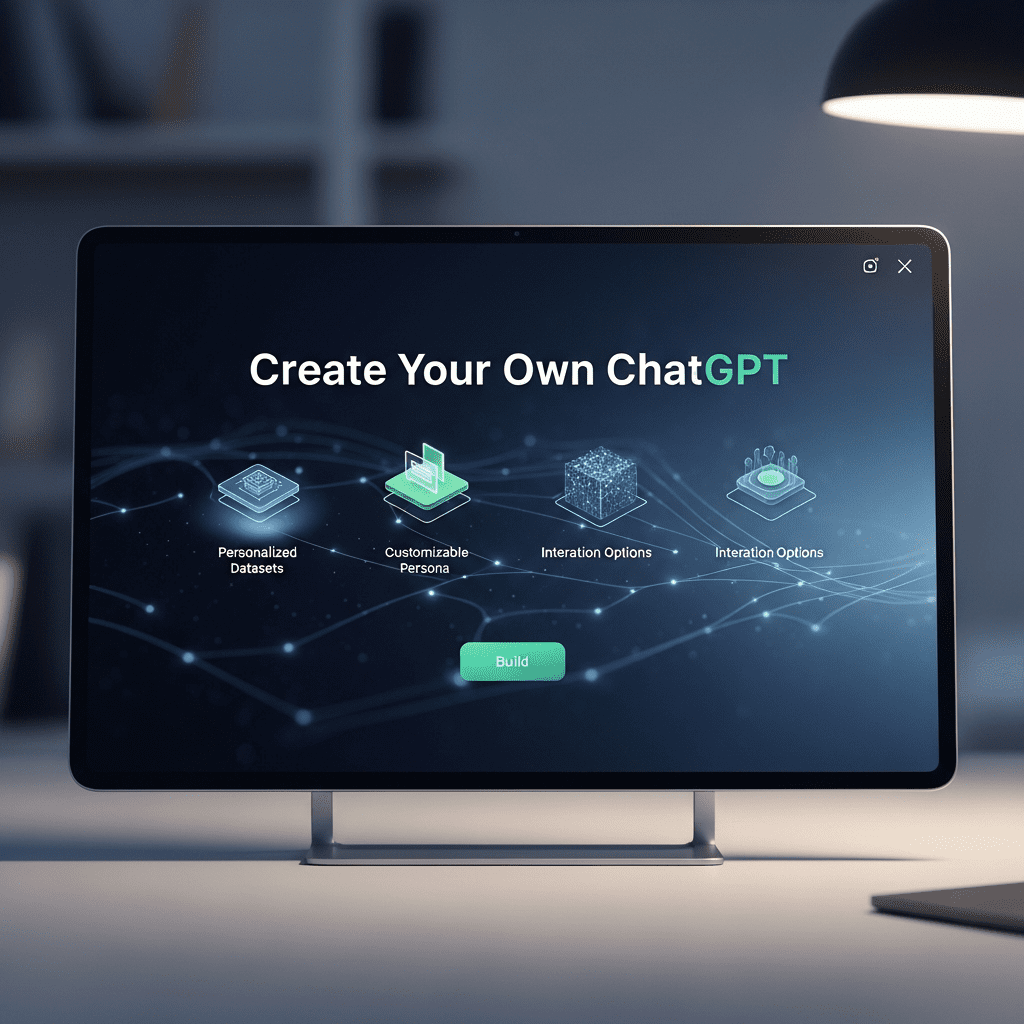
To create your own ChatGPT, gather these essential tools:
- Python – Main programming language for AI projects.
- PyTorch / TensorFlow – Deep-learning frameworks.
- Hugging Face Transformers – For pre-trained GPT-like models.
- LangChain / LlamaIndex – For connecting your model with data.
- Cloud Platforms – AWS, Azure, or Google Cloud for hosting.
4. Step-by-Step Guide to Create Your Own ChatGPT
Step 1 – Define Purpose
Clarify why you want to create your own ChatGPT. Is it for customer support, education, or personal productivity? A clear purpose shapes your data and tone.
For deeper technical details, visit Hugging Face’s Transformers documentation.
https://trendingnews.fun/best-ai-tools-in-2026/
Step 2 – Collect & Clean Data
Use reliable datasets like OpenAssistant, Alpaca, or your own customer chats. Remove duplicates, slurs, and irrelevant text for high-quality results.
Step 3 – Pick a Base Model
Choose the right starting point:
- Small-scale: GPT-2 / DistilGPT-2
- Medium: Mistral 7B / LLaMA 3 8B
- Large: Falcon 40B / GPT-NeoX 20B
Step 4 – Fine-Tune the Model
With Hugging Face, you can adapt your data:
from transformers import AutoTokenizer, AutoModelForCausalLM
model = AutoModelForCausalLM.from_pretrained("mistralai/Mistral-7B-v0.1")
tokenizer = AutoTokenizer.from_pretrained("mistralai/Mistral-7B-v0.1")
Fine-tune using LoRA (Low-Rank Adaptation) for efficient training.
Step 5 – Evaluate Performance
Ask your model questions and check fluency, logic, and tone. Keep iterating until responses feel natural.
Step 6 – Add a Chat Interface
Integrate your chatbot into a web or mobile app using Gradio or Streamlit. Example:
import gradio as gr
def chat(prompt): return model.generate_text(prompt)
gr.Interface(fn=chat, inputs="text", outputs="text").launch()
Step 7 – Deploy Your ChatGPT
Once you’ve perfected your AI, host it on:
- Hugging Face Spaces – free, quick hosting.
- AWS Sagemaker – scalable cloud solution.
- Docker + FastAPI – for production servers.
5. Enhance Your Custom ChatGPT
To make your chatbot more powerful and human-like:
- Add Memory: Store previous conversations for continuity.
- Use RAG (Retrieval-Augmented Generation): Let it access live data or documents.
- Integrate Voice: Use Whisper for speech-to-text and TTS engines for audio replies.
- Add Moderation: Use filters to prevent biased or unsafe content.
These upgrades make your chatbot smarter, safer, and more engaging.
6. Ethics and Data Responsibility
When you create your own ChatGPT, handle user data responsibly. Respect privacy laws like GDPR and avoid using copyrighted text in your training data.
Always include a disclaimer so users know they’re chatting with an AI. Responsible design builds user trust and brand credibility.
7. The Future of Custom ChatGPTs
AI is moving fast. Soon, smaller and more efficient models will run locally on phones and PCs. You’ll see multimodal chatbots that process images, voice, and video together.
By learning how to create your own ChatGPT now, you’re preparing for the next wave of intelligent, personal AI assistants that blend seamlessly into daily life.
Conclusion
Learning how to create your own ChatGPT opens endless opportunities. With open-source models, easy APIs, and ethical best practices, anyone can build a chatbot that informs, assists, and delights. Start small, experiment, and let your creativity shape the AI future.
About The Author




6 thoughts on “Create Your Own ChatGPT – Step-by-Step AI Guide 2025”